Leather Care PRO ultimate guide
The Ultimate Guide to Peeling Leather and Vinyl Sofa Repair
- Product families
- Leather Care PRO
- Designed for
- Sofa ownersDIY beginnersLeather and vinyl repairers

Quick answer
What this guide will help you do
- Confirm whether the sofa is leather, faux leather, vinyl, PU, bonded leather, or another coated material.
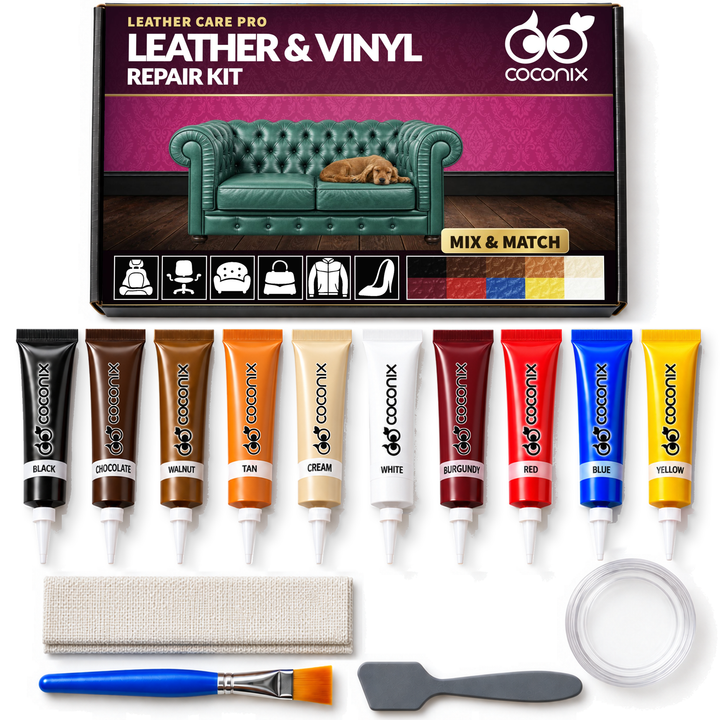
- Use the Repair Kit when a few peeling areas need rebuilding and blending with the original color.
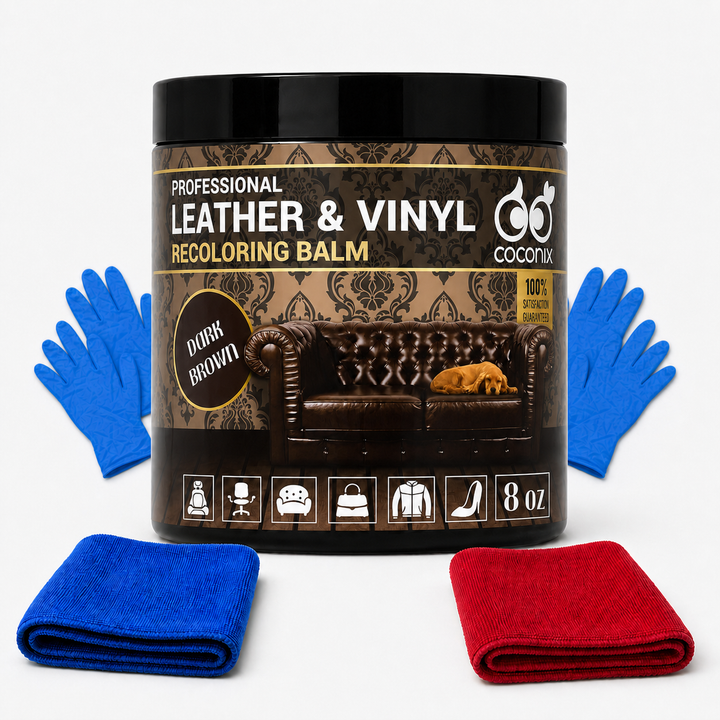
- Use Recoloring Balm when a broad compatible surface needs uniform recoloring rather than spot blending.
- Follow only the preparation and application instructions for the selected product.
Start here
Understand peeling leather, vinyl and faux-leather sofas
Localized peeling and widespread coating failure need different repair scopes and different expectations.

Visual identification
Identify localized peeling and broad sofa coating failure
Compare the number, spread and stability of the peeling areas before choosing a route.
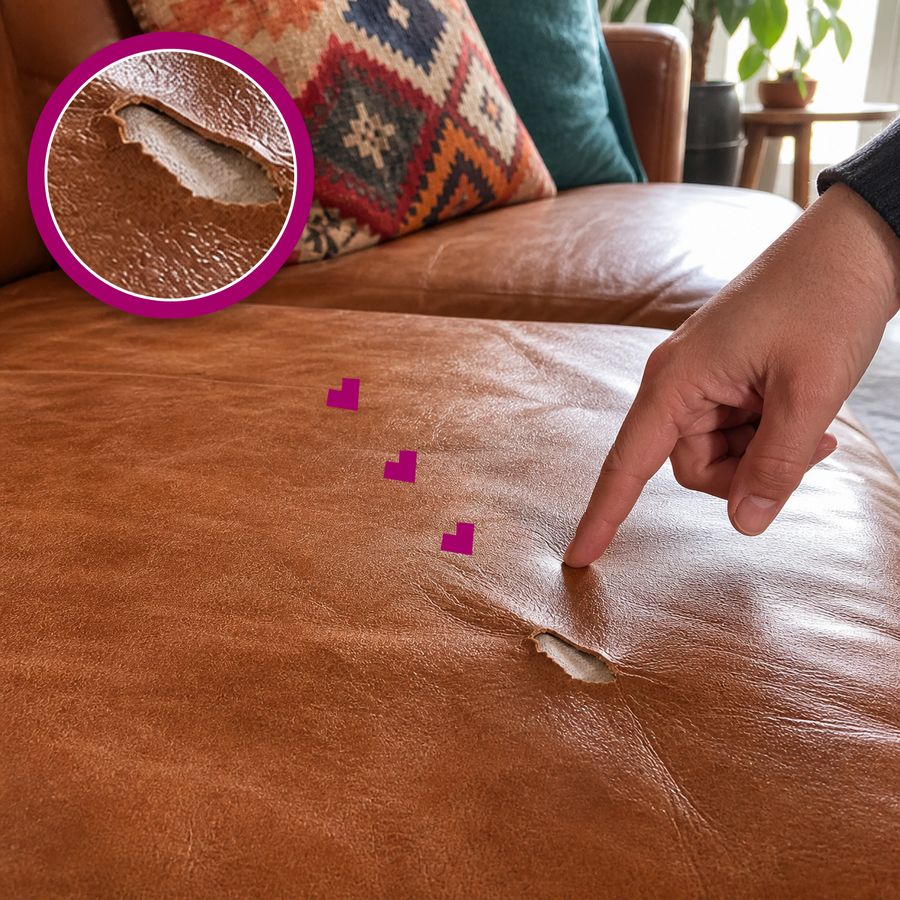
Localized repair scope
A few localized peeling patches
Broad recoloring scope
Peeling or color loss across whole panels
Reassess the sofa
Continuing or widespread unstable material
Start with the surface
Identify why the leather or vinyl sofa is peeling
Separate localized coating loss from extensive deterioration before choosing between repair and full recoloring.
Cost and route comparison
How much does peeling leather or vinyl sofa repair cost?
A compatible localized DIY repair can start with one $19.95 Coconix kit. Linked guides show representative professional ranges of $100–$1,000, €85–€850 and £80–£1,000, depending on scope.
DIY route
DIY localized repair with a Coconix kit
- USD
- $19.95
- Best for
- Stable, compatible localized damage with enough time for preparation, color matching, layering and drying.
- Time or difficulty
- Usually one repair session plus drying time; difficulty depends on material, depth, pattern and location.
- Tradeoffs
- Lower cash outlay, but the user controls diagnosis, preparation, color, texture and the final finish.
Current Coconix store price for one compatible repair kit before shipping and taxes; one kit can support multiple small repairs.
Professional route
Professional repair service
- USD
- $100–$1,000
- EUR
- €85–€850
- GBP
- £80–£1,000
- Best for
- Broad damage, safety-sensitive locations, failed structure, active moisture or movement, or results where specialist matching is essential.
- Time or difficulty
- Scheduling and service time vary by scope; refinishing, replacement parts or structural work can extend the project.
- Tradeoffs
- Higher cash outlay, but professional tools and experience can be valuable for complex or high-risk work.
Planning range compiled from the professional-cost ranges in this guide’s linked Coconix How-To articles; local quotes vary with scope, access, material and structural work.


Product guide
Choose the Repair Kit or Recoloring Balm for a peeling sofa
Use the Repair Kit for localized blending and Recoloring Balm for broad, uniform recoloring of compatible stable surfaces.

Detailed guides
Open the matching peeling repair method
Use the closest repair guide for the item, material, and size of the peeling area.


Quality check
How to evaluate a repaired or recolored peeling sofa
Check color uniformity, edge transitions, flexibility and whether peeling has stopped outside the treated area.
Troubleshooting
Troubleshoot peeling-sofa repair and recoloring problems
Identify whether the problem is color, edge transition, texture or continued coating failure.
Why does a leather or vinyl repair look too light, dark or flat?
- Likely cause
- The mix was judged while wet, the undertone differs, the compound layer is too thick, the lighting changed, or the surrounding grain was not recreated.
- What to do
- Compare a thin, fully dry test beside undamaged leather or vinyl in normal-use light. Adjust one color at a time, mix thoroughly and dry-test again. Apply only thin layers and let each dry fully; recreate the surrounding texture while the final layer is semi-dry, then blend the fully dried edge as shown in the matching Coconix method.
Why is the edge or texture of a leather or vinyl repair still visible?
- Likely cause
- Compound was applied too thickly, the opening or groove was not leveled in thin layers, the blend ended abruptly, or texture was not recreated while the final layer was semi-dry.
- What to do
- Use the damage-specific Coconix method on the smallest affected area. Build a low spot with thin layers, letting each layer dry fully. Avoid adding more material to a ridge; compare the cured edge with the official blending step before reworking it. For a smooth patch, recreate the surrounding texture while the final corrective layer is semi-dry, then blend only the fully dried boundary.
What should I do if leather or vinyl damage reopens or peeling continues?
- Likely cause
- The opening lacked support, the compound was built too thickly or used before fully dry, repeated flexing or abrasion is stressing the spot, or the surrounding coating is failing beyond a localized repair.
- What to do
- Clean and dry the complete area, inspect it while the item moves normally and choose the matching route. For an opened cut or tear, use the kit’s backed-opening method and thin compound layers. For localized stable peeling, remove only fully detached fragments and use the repair method. For broad stable coating loss, prepare and recolor the larger continuous area with the Balm method so isolated patches do not keep appearing.
- Stop or get help when
- Use specialist upholstery repair for airbag seams, restraint or electrical components, failed load-bearing seams, damaged frames or mechanisms, major contaminated foam loss, or leather or vinyl that keeps splitting or crumbling beyond the repair area.
Customer repairs
Peeling-sofa repair and recoloring before-and-after results
These customer review images show both localized leather and vinyl repair and broad recoloring outcomes.

Scratches and cracks

Peeling areas

Fading and discoloration
Protect the finish
Care for the repaired or recolored sofa
Let the finish dry completely and reduce the heat, friction, and harsh cleaning that can accelerate renewed wear.
Coconix repair solutions
Products featured in this guide
Match the product to the material, damage and size of the repair.

Clear answers
The Ultimate Guide to Peeling Leather and Vinyl Sofa Repair: frequently asked questions
Should I use the Repair Kit or Recoloring Balm for a peeling sofa?
Can a sofa be repaired if peeling covers many panels?
Continue learning