Repair guide
How to fix a burn mark on a leather love seat?
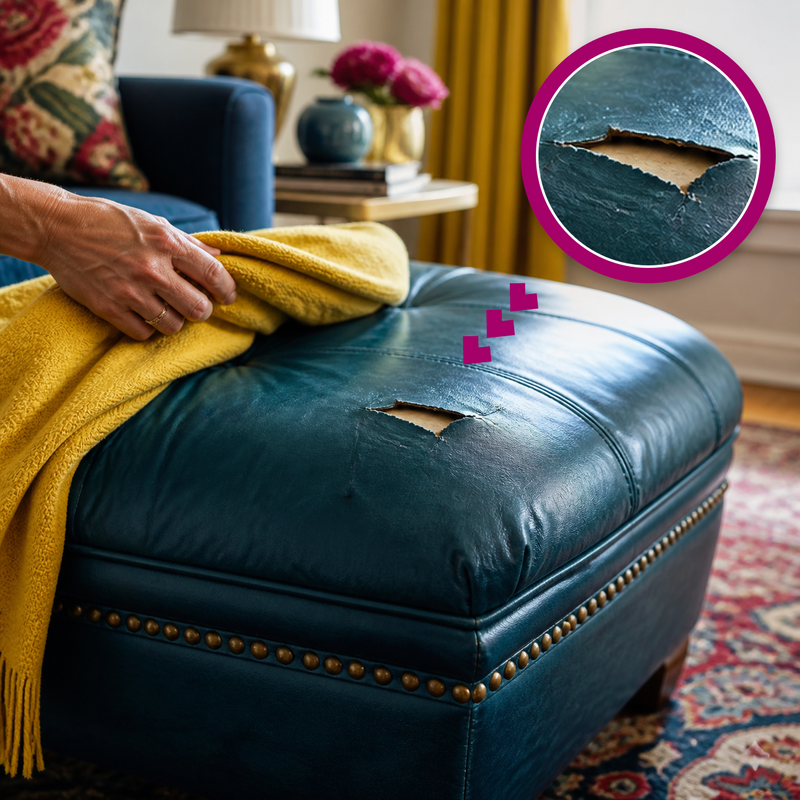
A burn mark on a leather love seat can be repaired after the area is completely cool and free of continuing smoke odor. Remove only loose char; for an opening larger than 1/4 inch (0.6 cm), place backing fabric from the Coconix Leather & Vinyl Repair Kit beneath the leather. Then rebuild the missing surface with thin layers of color-matched compound and recreate the surrounding texture.
Inspect the full depth of the burn before starting. Compare the damaged panel in daylight from several angles because leather grain and sheen can vary across the seat, arm and cushion. A localized scorch, brittle edge or small burned opening is repairable when the surrounding leather can securely anchor backing and compound. Let every layer dry before leveling and blending the next. Use professional upholstery repair if heat or smoke odor remains, damage reaches a seam, cushion core, spring or frame, padding is broadly burned, or a wide area of leather has become brittle or crumbly.
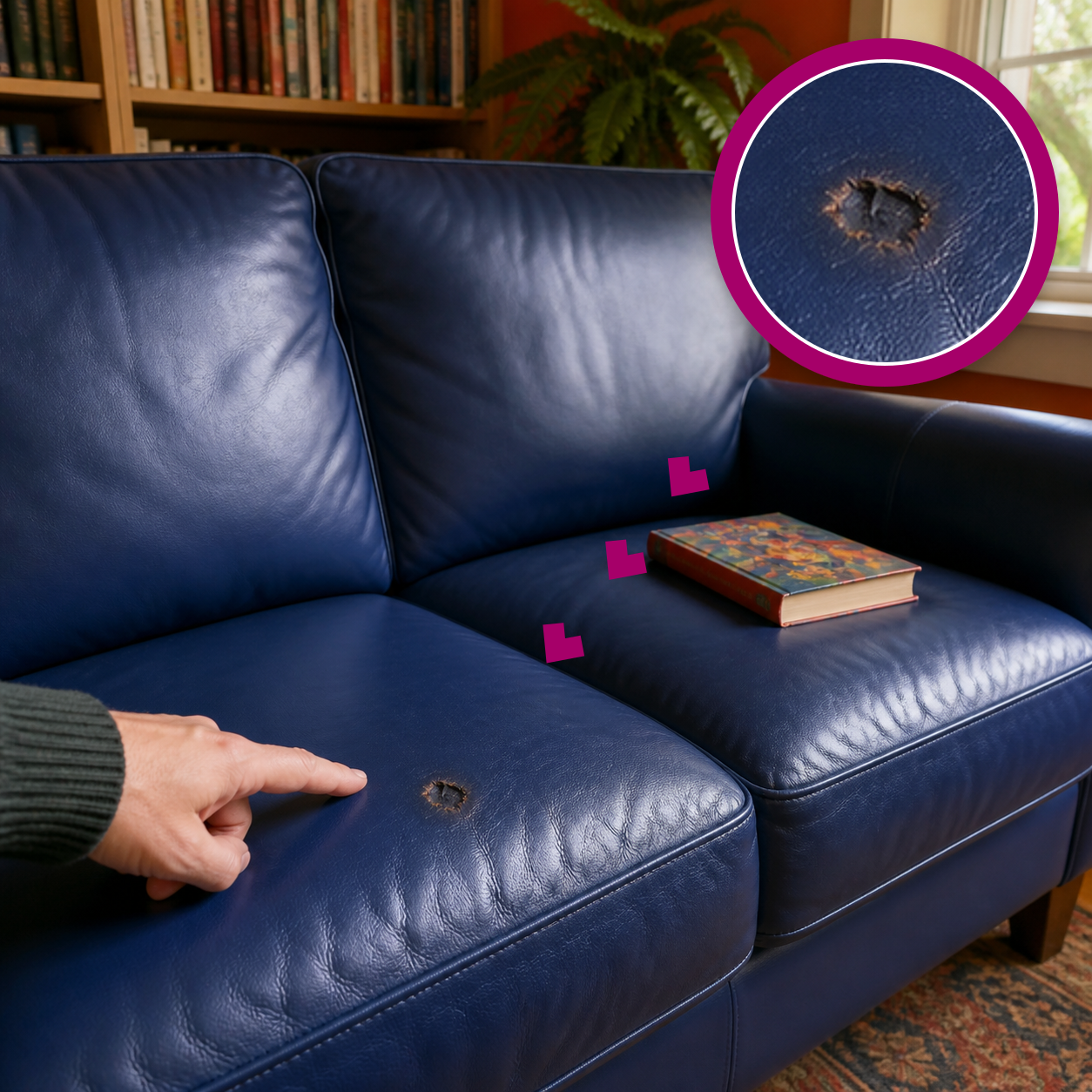
Repair at a glance: burn marks on a leather love seat
- Material
- Leather upholstery
- Damage
- burn marks
- Item
- leather love seat
Repair cost
How much does it cost to repair burn marks on a leather love seat?
Professional repair estimates by currency
USD
United States dollar
- Smaller repair$200–$500
- More extensive repair$800+
EUR
Euro
- Smaller repair€170–€430
- More extensive repair€680+
GBP
British pound
- Smaller repairFrom £150
- More extensive repair£600+
What does professional repair cost?
What does a DIY repair cost?
$19.95
The kit price shown here is live. One kit can often cover more than one small repair.
See the repair kitWhat changes the repair cost?
- The size, depth and severity of the damage
- The material and whether reinforcement is needed
- The color, grain, texture and finish-matching work
- Local labor rates and whether the item must be transported
Professional prices are indicative ranges from the approved article content and can vary by repairer, location and condition. Request a local quote for an exact comparison.
Difficulty
How difficult is it to repair burn marks on a leather love seat?
Time required
How long does it take to repair burn marks on a leather love seat?
When burn marks on a leather love seat can be repaired at home
When to call a professional for burn marks on a leather love seat
Prepare before you start
Materials needed to repair burn marks on a leather love seat
-

Coconix Leather & Vinyl Repair Kits
-

Rubbing Alcohol (70% or more)
-

Cotton Swab or Cotton Pad
-

Plastic Wrap (for texture)
-

Scissors (if necessary)


Before repairing burn marks on a leather love seat
Watch how to repair burn marks on a leather love seat
The written procedure below covers the repair steps shown in the video.
Detailed procedure
How to repair burn marks on a leather love seat: step by step
-

Step 1
Preparing the Area
- Inspect the damaged area on your leather love seat to identify any loose threads, jagged edges, or burn marks that could interfere with the repair process.
- If the area includes any excess threads and uneven bits, charred or burned material, gently cut it off to remove the damaged portion entirely.
- Take your time to create an even edge around the burn marks, as this will help ensure the repair adheres properly and blends seamlessly.
-

Step 2
Cleaning the Area
- Use a cotton swab dipped in rubbing alcohol to clean the area around the burn marks on your leather love seat, removing any dirt, oil, or residue.
- Test the rubbing alcohol on a hidden or inconspicuous spot first to ensure it does not damage or discolor the material.
- If rubbing alcohol proves too harsh for your leather love seat, opt for a gentler alternative like warm, soapy water or your regular leather or vinyl cleaner.
-

Step 3
Using the Backing Fabric
- For burn marks larger than 1/4 inch or 0.6 cm, prepare a piece of backing fabric by cutting it slightly larger than the damaged area with smooth, rounded edges.
- Use the spatula included in the kit to carefully insert the backing fabric underneath the damaged area of your leather love seat, ensuring it is positioned securely.
- Smooth the backing fabric to eliminate any folds or creases, creating a stable foundation for the repair compound.
-

Step 4
Mixing the Repair Compound
- If your repair requires a custom color, consult the Color Mixing Guide included in your kit to create the perfect match for your leather love seat.
- Use the empty mixing jar provided in the kit to combine the recommended colors.
- Gradually mix the colors, adding small amounts at a time, until you achieve the desired shade.
- Ensure the color is well-blended and test it on a hidden area to confirm it matches before applying it to the repair.
-

Step 5
Applying the Repair Compound
- Apply the repair compound to the burn marks on your leather love seat.
- Start by applying it under and along the edges of the damaged area to ensure proper adhesion, then work from the outer edges toward the center for an even application.
- Use the spatula for larger applications and the brush for surface applications and detail touch-ups.
-

Step 6
Drying and Additional Layers
- Allow the repair compound on your leather love seat to dry thoroughly for several hours, ensuring it is completely dry and no longer sticky to the touch before proceeding.
- Once the initial layer has dried, assess the repaired area to determine if additional layers are needed to build it up to match the surrounding surface.
- Apply additional layers as necessary, letting each layer dry fully before applying the next, to ensure a smooth, level, and seamless repair.
-

Step 7
Adding Texture
- When the repair compound on your leather love seat has reached a semi-dry state, tear off a piece of plastic wrap that is slightly larger than the repaired area.
- Gently press the plastic wrap against the semi-dry final layer of the repair compound, applying light pressure to create a textured effect.
- Repeat this process as needed, adjusting the placement and pressure, until you achieve the desired texture that blends seamlessly with the surrounding surface.
-

Step 8
Finishing Touches
- Once the repair compound on your leather love seat has fully dried, moisten a cotton pad or cotton swab with rubbing alcohol.
- Gently buff the edges of the repaired area to smooth out any roughness and blend the repair seamlessly with the surrounding surface.
- Take care to apply light pressure while buffing to avoid disturbing the repair or the adjacent material.


Protect the result
How to care for a leather love seat after repairing burn marks
- Keep pressure, flexing and moisture away from the repair until every layer is fully dry.
- Clean gently with a compatible leather or vinyl product and avoid harsh solvents, abrasion and strong heat.
- Protect the surface from sharp objects and repeated friction where practical.
- Inspect the repair periodically. Do not apply slippery dressings to steering wheels or other vehicle controls.
Aftercare
Troubleshooting
Why does a leather or vinyl repair look too light, dark or flat?
The mix was judged while wet, the undertone differs, the compound layer is too thick, the lighting changed, or the surrounding grain was not recreated.
Compare a thin, fully dry test beside undamaged leather or vinyl in normal-use light. Adjust one color at a time, mix thoroughly and dry-test again. Apply only thin layers and let each dry fully; recreate the surrounding texture while the final layer is semi-dry, then blend the fully dried edge as shown in the matching Coconix method.
Why is the edge or texture of a leather or vinyl repair still visible?
Compound was applied too thickly, the opening or groove was not leveled in thin layers, the blend ended abruptly, or texture was not recreated while the final layer was semi-dry.
Use the damage-specific Coconix method on the smallest affected area. Build a low spot with thin layers, letting each layer dry fully. Avoid adding more material to a ridge; compare the cured edge with the official blending step before reworking it. For a smooth patch, recreate the surrounding texture while the final corrective layer is semi-dry, then blend only the fully dried boundary.
What should I do if leather or vinyl damage reopens or peeling continues?
The opening lacked support, the compound was built too thickly or used before fully dry, repeated flexing or abrasion is stressing the spot, or the surrounding coating is failing beyond a localized repair.
Clean and dry the complete area, inspect it while the item moves normally and choose the matching route. For an opened cut or tear, use the kit’s backed-opening method and thin compound layers. For localized stable peeling, remove only fully detached fragments and use the repair method. For broad stable coating loss, prepare and recolor the larger continuous area with the Balm method so isolated patches do not keep appearing.
Use specialist upholstery repair for airbag seams, restraint or electrical components, failed load-bearing seams, damaged frames or mechanisms, major contaminated foam loss, or leather or vinyl that keeps splitting or crumbling beyond the repair area.
Why did the repair color change as it dried?
The mixture was judged while wet, the test layer was too thick, or the surface detail and lighting changed the apparent result.
Keep the remaining mixture. Make one very small correction, mix thoroughly and test again. If the base color is correct but the repair still stands out, recreate the required texture, grain, pattern or pile instead of changing the color again.
Stop before visible application if repeated small tests do not match; send Coconix natural-light photos of the whole item, the damage and a nearby undamaged area.
Frequently asked questions
Can the Leather & Vinyl Repair Kit rebuild a tear or hole?
Can Coconix repair colors be mixed?
Should I judge a Coconix repair color while it is wet or dry?
Why is drying time part of a successful Coconix repair?
Customer repair story
Goodbye, Burn Marks!
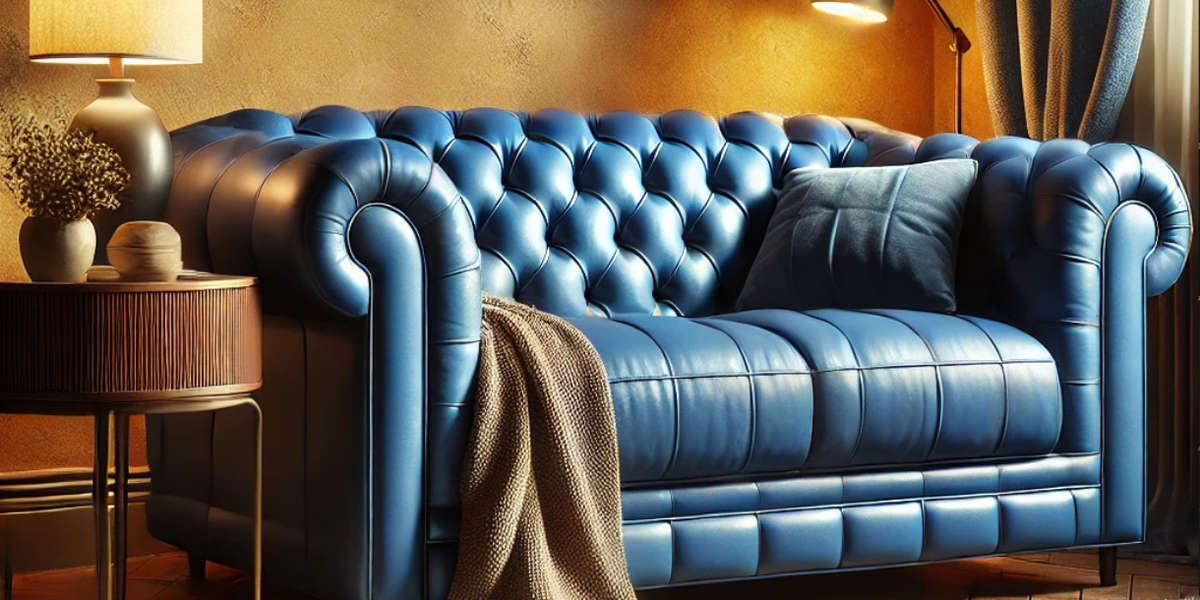
Can’t believe my loveseat is burn-mark-free! Coconix is a game-changer, and the repair process was oddly satisfying.
Individual repair results vary with the damage, material, preparation and application.
Recommended for this method
Best Coconix kit to repair burn marks on a leather love seat
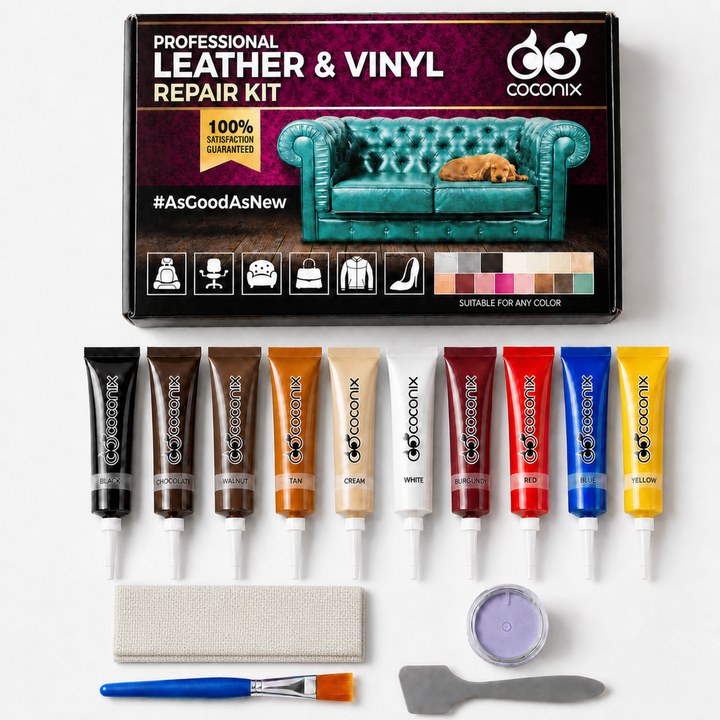
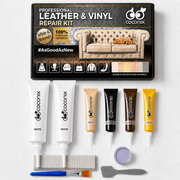
Leather & Vinyl Repair Kit - Mix & Match Any Color
$19.95
Repair damage on multicolored or hard-to-match leather and vinyl without replacing the whole item. The Coconix Leather & Vinyl Repair Kit combines backing fabric with mixable repair compounds...
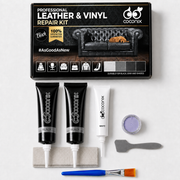
Other color options

More repair possibilities