Repair guide
How to repair a damaged parquet floor?
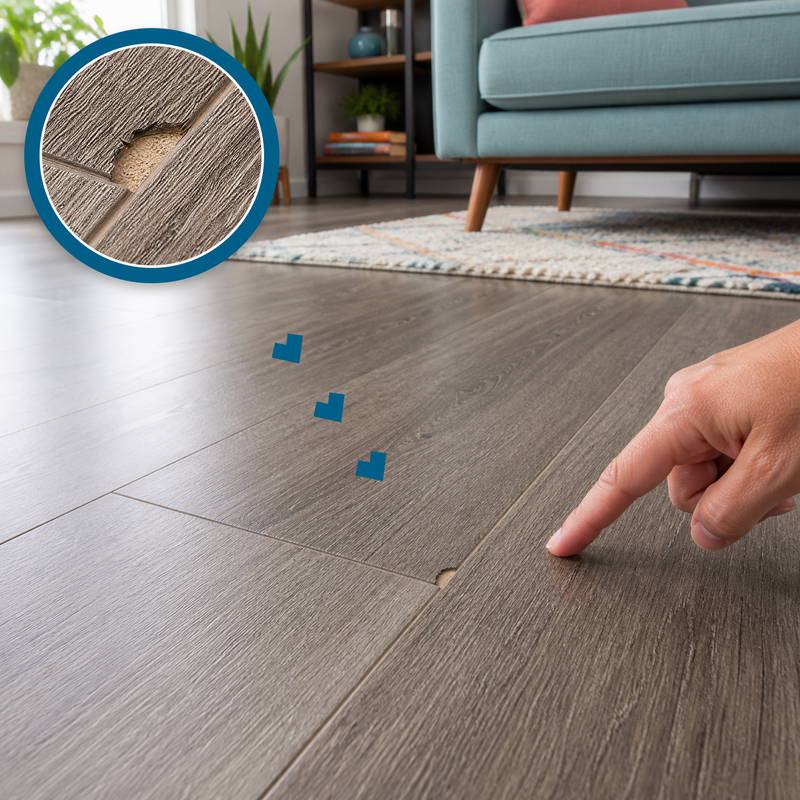
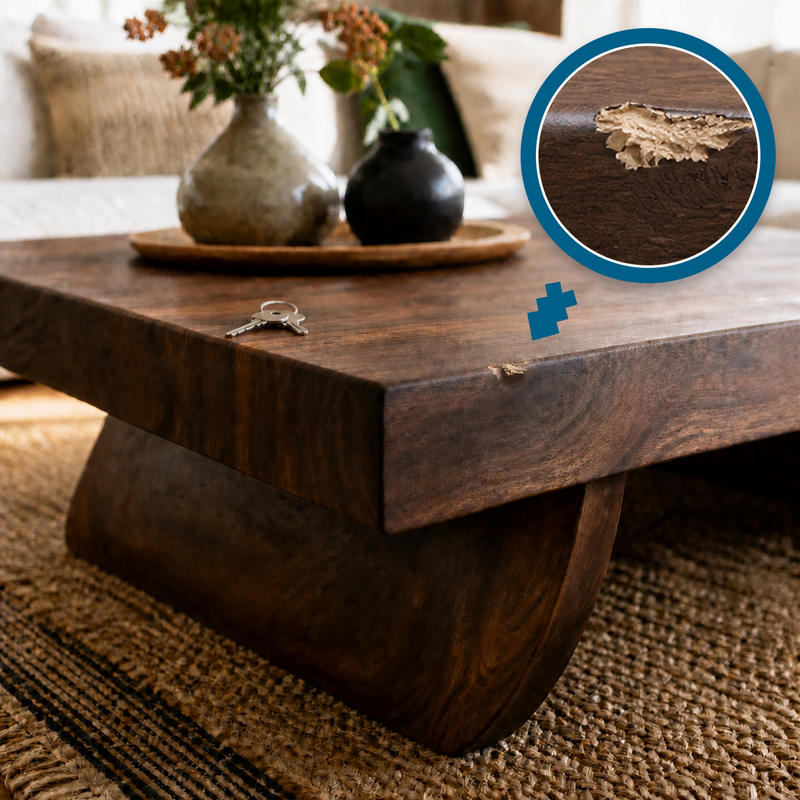
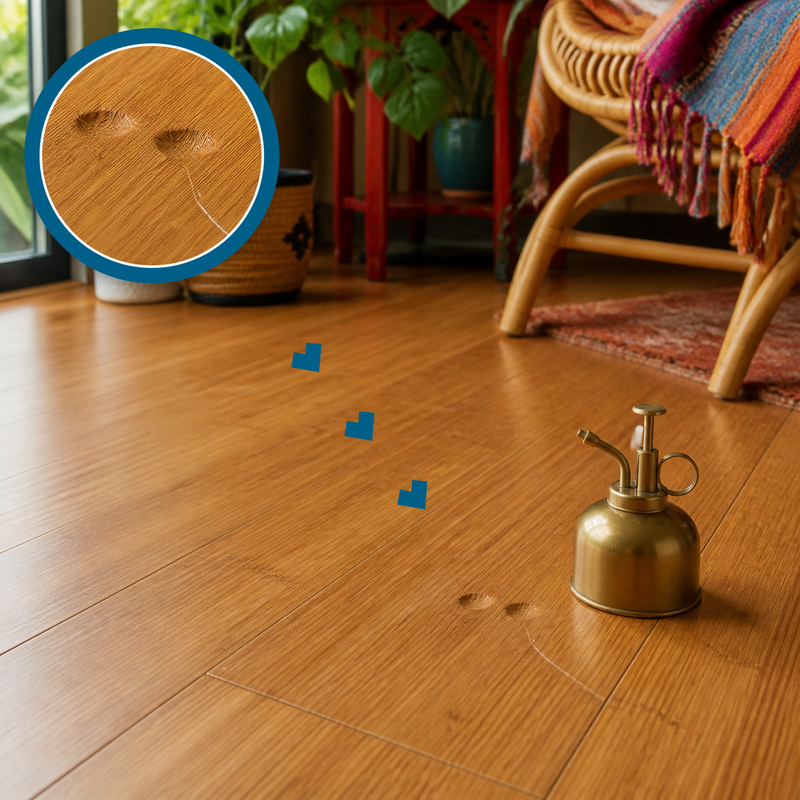
A damaged parquet floor may have dents, chips or scratches that interrupt both the finish and the geometric wood pattern, such as herringbone. The Coconix Floor & Furniture Repair Kit rebuilds deeper missing material with epoxy putty where needed, fills the visible surface with matched compound and recreates grain in the correct direction for each affected block.
Map the damaged blocks, joints, colors and grain directions before cleaning, then test every block for movement. Photograph the parquet layout first so each repaired block retains the original pattern and grain direction. Secure blocks can be repaired individually while preserving the surrounding pattern; never bridge a moving joint with compound. Use flooring service when blocks are loose or missing, adhesive has failed, moisture is active, wood is swollen or rotten, the subfloor moves, or damage extends through several blocks.
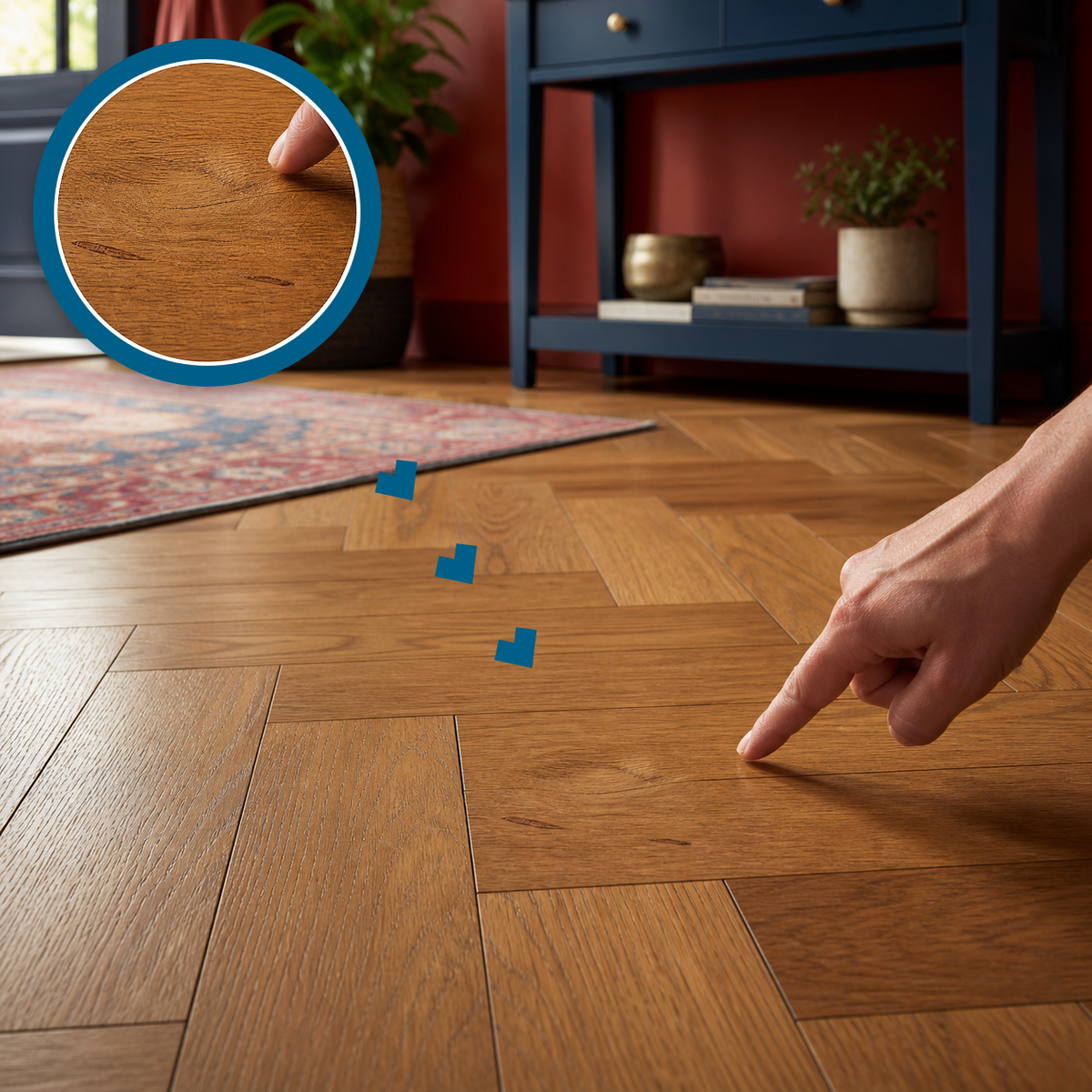
Repair at a glance: dents or scratches on a parquet floor
- Material
- Parquet flooring
- Damage
- dents or scratches
- Item
- parquet floor
Repair cost
How much does it cost to repair dents or scratches on a parquet floor?
Professional repair estimates by currency
USD
United States dollar
- Smaller repair$300–$700
- More extensive repair$1,500+
EUR
Euro
- Smaller repair€260–€600
- More extensive repair€1,280+
GBP
British pound
- Smaller repair£250–£600
- More extensive repair£1,200+
What does professional repair cost?
What does a DIY repair cost?
$19.95
The kit price shown here is live. One kit can often cover more than one small repair.
See the repair kitWhat changes the repair cost?
- The size, depth and severity of the damage
- The material and whether reinforcement is needed
- The color, grain, texture and finish-matching work
- Local labor rates and whether the item must be transported
Professional prices are indicative ranges from the approved article content and can vary by repairer, location and condition. Request a local quote for an exact comparison.
Difficulty
How difficult is it to repair dents or scratches on a parquet floor?
Time required
How long does it take to repair dents or scratches on a parquet floor?
When dents or scratches on a parquet floor can be repaired at home
When to call a professional for dents or scratches on a parquet floor
Prepare before you start
Materials needed to repair dents or scratches on a parquet floor
-

Coconix Floor & Furniture Repair Kits
-

Cleaning Cloth
-

Sanding Paper (optional)


Before repairing dents or scratches on a parquet floor
Watch how to repair dents or scratches on a parquet floor
The written procedure below covers the repair steps shown in the video.
Detailed procedure
How to repair dents or scratches on a parquet floor: step by step
-

Step 1
Preparing the Area
- Gently remove any dirt, dust, or debris from the damaged area of your parquet floor to create a clean surface for the repair.
- Clean the surrounding area thoroughly to eliminate any remaining particles or residue that could interfere with adhesion.
- Use a damp cloth to wipe the area, ensuring it is completely free of dust and oils, then let it air dry fully before starting the repair process.
-

Step 2
Applying the Wood Putty
- For dents or scratches larger than 1/4 inch or 0.6 cm, use the wood filler epoxy putty to fill the damaged area.
- Cut off a small portion of the epoxy putty and knead it thoroughly until the color is uniform.
- Apply the filler to the dents or scratches immediately after kneading to ensure proper adhesion.
- Smooth out any excess filler to avoid bulges and press it firmly into the damaged area.
- Allow the filler to cure as per the instructions until it hardens and becomes stable.
-

Step 3
Mixing and Matching the Color
- Consult the Color Mixing Guide included in your kit to create the ideal shade for your parquet floor.
- Use the provided empty mixing jar to combine the colors as per the guide.
- Mix the colors thoroughly to achieve a smooth and consistent tone.
- Ensure the color matches perfectly before applying it to your parquet floor for a seamless repair.
-

Step 4
Applying the Repair Compound
- Evenly apply the repair compound to the damaged area of your parquet floor, starting from the edges of the dents or scratches and working inward to avoid air bubbles.
- Use the spatula for larger dents or scratches to ensure a smooth application.
- For detailed touch-ups or smaller areas, use the brush for precise and controlled application.
-

Step 5
Smoothing the Surface
- Smooth the surface of your parquet floor using gentle, even strokes to create a seamless and level finish that blends naturally with the surrounding area.
- Quickly remove any excess compound from the undamaged portions of your parquet floor using a clean paper towel, ensuring no residue is left behind.
-

Step 6
Drying and Additional Layers
- Allow the repair compound on your parquet floor to dry completely for several hours, ensuring it is no longer sticky to the touch.
- If needed, apply additional layers to build up the dents or scratches until it is flush with the surrounding surface.
- Ensure each layer dries fully before applying the next to achieve the best and most durable results.
-

Step 7
Adding Texture
- If your parquet floor has grain patterns, designs, or textures, use the small brush to carefully replicate them for a realistic and natural finish.
- Use darker shades like Walnut, Mahogany, or Black to recreate the original grain patterns, ensuring the repaired area blends seamlessly with the surrounding surface.
-

Step 8
Finishing Touches
- Inspect the repaired area on your parquet floor after the epoxy putty and surface compound have fully cured.
- If the material and original finish can safely accept light sanding, use fine-grit sandpaper with gentle, controlled pressure only where leveling is needed.
- Do not sand a laminate wear layer, delicate veneer or thin factory finish. Level the filler during application and remove excess compound before it dries instead.
- Stop before the surrounding color, pattern, grain or finish is affected.


Protect the result
How to care for a parquet floor after repairing dents or scratches
- Keep the repaired item or floor area out of use until the epoxy and surface layers have fully cured.
- Clean with a material-compatible, nonabrasive product and wipe spills promptly.
- Use pads, glides, mats or other suitable protection to reduce repeat impacts, moisture and abrasion.
- Apply wax, polish or sealant only when the surface manufacturer confirms compatibility; never sand a laminate wear layer.
Aftercare
Troubleshooting
Why does a wood or laminate floor repair look too light, dark or flat?
The mix was judged while wet or under different light, the undertone is off, or the repair has one flat color without the darker or lighter detail found nearby.
Compare the fully dry repair with a clean, undamaged nearby area in the room's normal light. Adjust one color in a small amount and dry-test again. When the base tone matches, use the approved floor method to add restrained grain or pattern detail that follows the surrounding direction.
Why does a wood or laminate floor repair look raised, sunken or sharply outlined?
Too much filler, insufficient fill in a stable void, shrinkage before full cure, an abrupt color boundary or missing grain detail is catching the light.
Correct only the condition you can confirm. For a stable low spot, return to the matching fill method and build only to the surrounding level. For a visible outline, match the dry base color first, keep the blend boundary small and recreate the nearby grain or pattern. Alter a cured raised area only when the approved method and original finish safely permit it.
Request product-specific guidance before sanding or scraping laminate wear layers, delicate veneers or thin factory finishes.
What should I do if wood or laminate floor damage returns or the floor keeps moving?
Active moisture, seasonal or subfloor movement, a loose board or plank, an unsupported deep void, renewed impact or active pest damage is changing the repaired area.
Check whether the floor is dry, firm and stationary. Correct the moisture source or mechanical movement first. On stable localized deep damage, rebuild missing material with the kit's epoxy-putty method, allow it to cure, then restore the matched base color and nearby grain or pattern. Begin insect-hole repair only after the infestation is confirmed inactive.
Use qualified assessment when moisture or movement continues, the subfloor may be involved, or the surrounding installation is broadly loose or damaged.
Why did the repair color change as it dried?
The mixture was judged while wet, the test layer was too thick, or the surface detail and lighting changed the apparent result.
Keep the remaining mixture. Make one very small correction, mix thoroughly and test again. If the base color is correct but the repair still stands out, recreate the required texture, grain, pattern or pile instead of changing the color again.
Stop before visible application if repeated small tests do not match; send Coconix natural-light photos of the whole item, the damage and a nearby undamaged area.
Frequently asked questions
What wood and laminate floor damage can the Coconix Floor & Furniture Repair Kit repair?
Can the Coconix Floor & Furniture Repair Kit fill deep wood or laminate floor damage?
How do I match the color and grain of a wood or laminate floor repair?
When should wood or laminate floor damage be professionally assessed?

Customer repair story
Parquet Perfection!
Coconix worked wonders on my parquet floor. The loose tiles were driving me crazy, but now they’re secure, and the scratches are gone. I saved a fortune compared to professional quotes, and my floor has never looked better!
Individual repair results vary with the damage, material, preparation and application.
Recommended for this method
Best Coconix kit to repair dents or scratches on a parquet floor
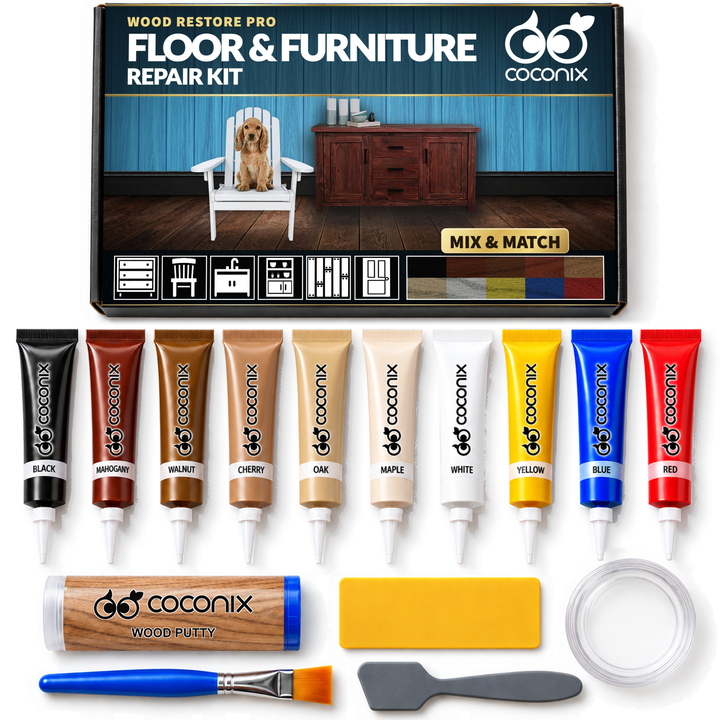
Floor & Furniture Repair Kit - Mix & Match Any Color
$19.95
Repair damage on wood floors and furniture instead of replacing the whole surface. The Coconix Floor & Furniture Repair Kit pairs kneadable epoxy wood putty with 10 mixable...
More repair possibilities